Hirvia
A comprehensive job-search CRM designed to streamline applications. Features intuitive tracking and organized workflows.
Timeline
Ongoing
Role
Full Stack Engineer
Status
CompletedTechnology Stack
Building Hirvia
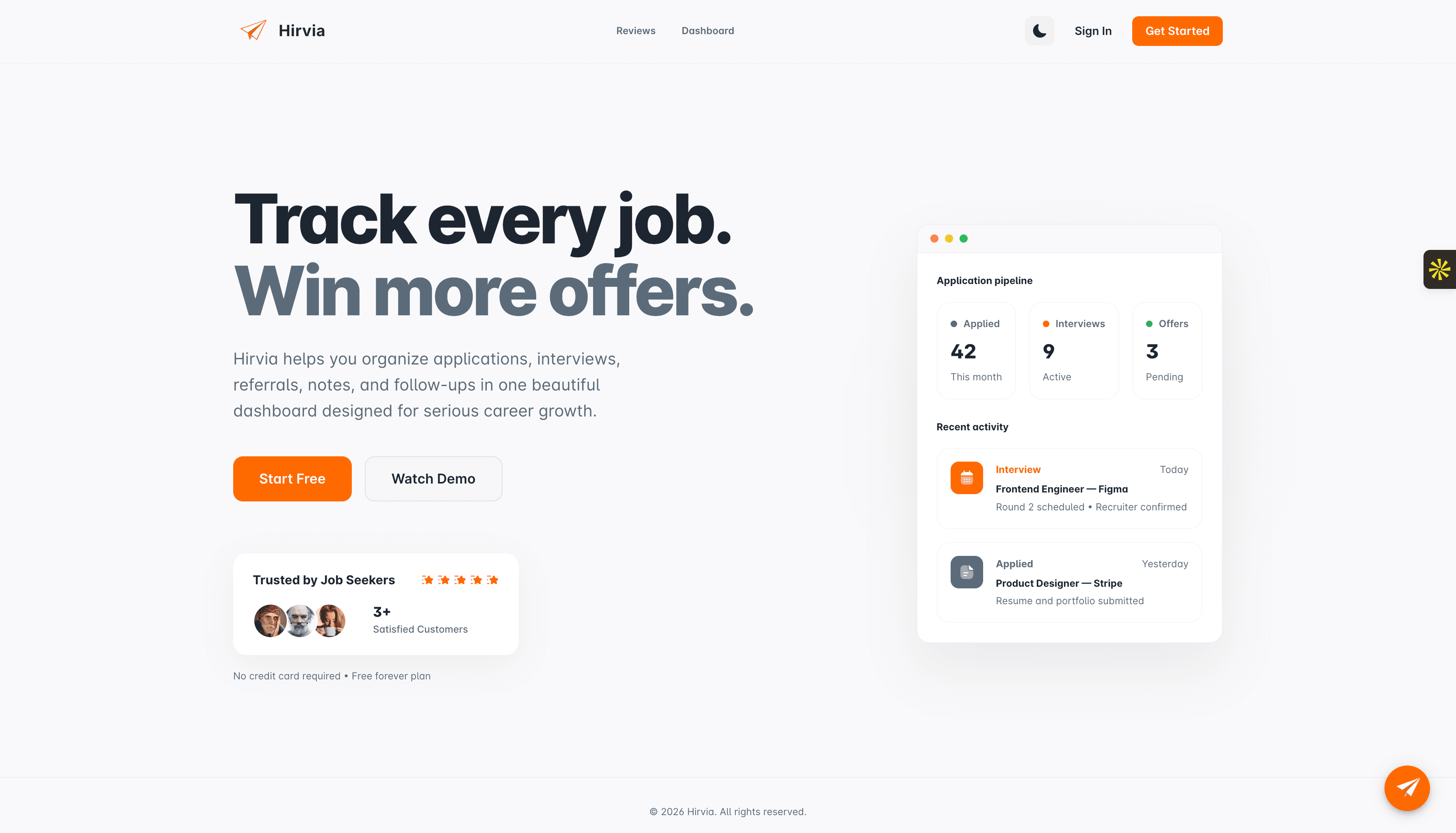
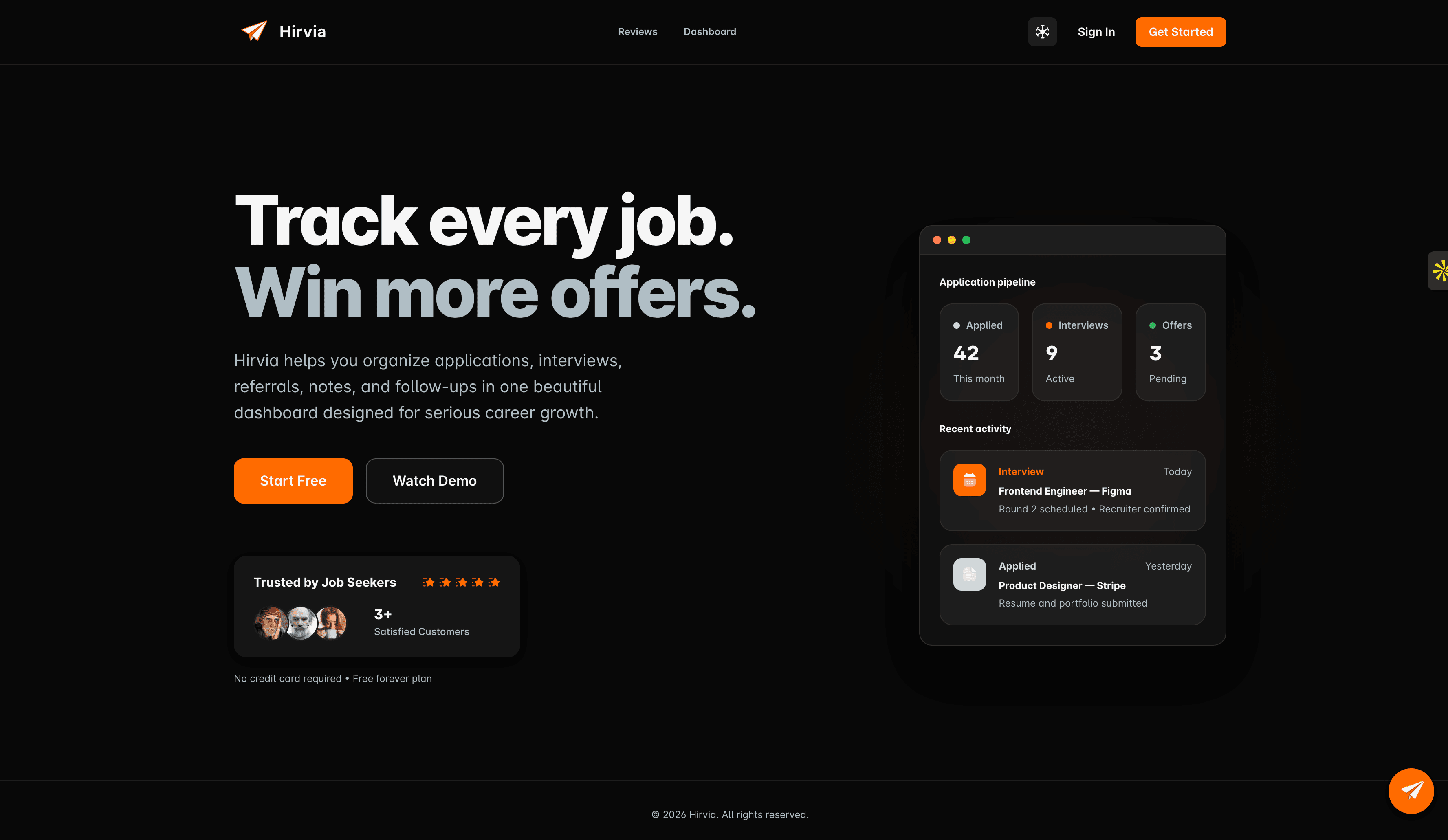
Hirvia is a purpose-built job-search CRM designed to help professionals escape the chaos of spreadsheets and unorganized notes. It provides a centralized dashboard to track applications, manage interview stages, and organize career resources effectively.
The Problem
Searching for a job is often a full-time job in itself. Candidates typically apply to dozens, if not hundreds, of positions across multiple platforms. Tracking the status of each application, storing specific resume versions tailored for each role, and remembering interview dates using traditional spreadsheets quickly becomes overwhelming and inefficient.
The Solution
I built Hirvia to act as a personal CRM for job seekers. It replaces messy spreadsheets with an intuitive, Kanban-style board that visually represents the candidate's pipeline—from "Applied" and "Interviewing" to "Offer" or "Rejected".
Key Features
- Visual Pipeline Management: A drag-and-drop Kanban board to seamlessly move applications between different stages.
- Centralized Document Storage: Attach specific cover letters and resumes directly to individual job applications for easy reference before an interview.
- Analytics Dashboard: Track success rates, application velocity, and interview conversion metrics over time.
Technical Challenges
A significant technical hurdle was managing complex client-side state, specifically regarding the drag-and-drop functionality of the Kanban board. Ensuring that UI updates felt instantaneous while maintaining synchronization with the backend required a highly optimistic UI approach.
To achieve this, I utilized advanced React state management patterns alongside a robust Node.js backend. When a user drags a card to a new column, the UI updates immediately, and the backend synchronizes silently in the background. If the API request fails, the state gracefully rolls back, ensuring data integrity without sacrificing perceived performance.